
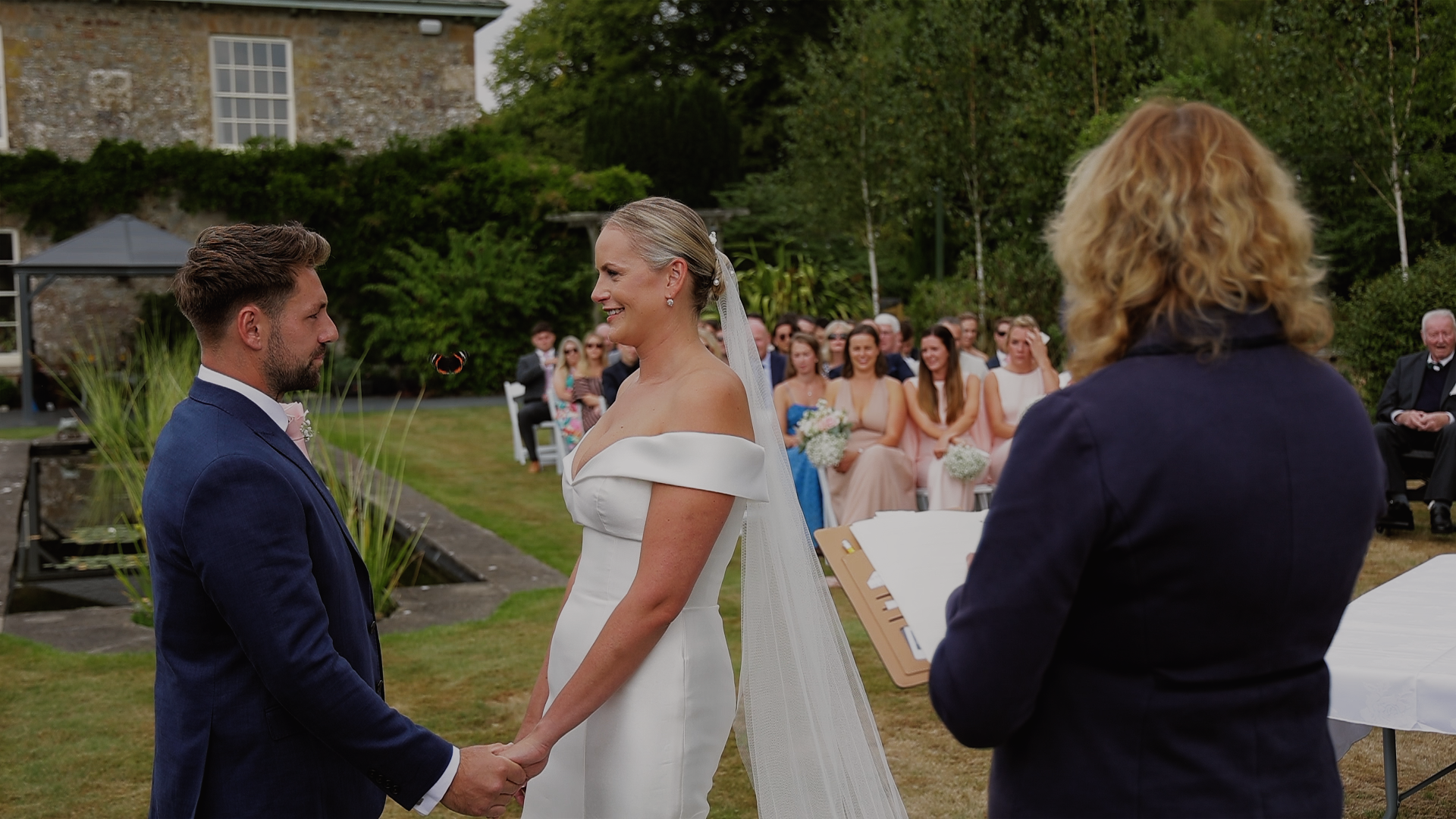
When couples first enquire about wedding videography, one of the things that often comes up quite early in the conversation is the fact that I only take on a limited number of weddings each year. It is something I am very transparent about, and it is not really based on scarcity for the sake of it, but more on how I want each story to be approached and the level of care I believe every wedding film genuinely requires.
Because once you step back and think about what a wedding film actually is, it is not just a collection of clips from the day. It is a story that is shaped over time, both in the way it is filmed and then later in the way it is crafted in the edit, and that process needs space to be done properly rather than being rushed through as part of a constant cycle of delivery.
Storytelling takes time, not just footage
Even though this is my full-time work and I am filming and editing weddings throughout the year, I have never wanted the process to feel like something that is simply being pushed from one stage to the next. The filming itself is only one part of it, and in many ways, it is just the beginning of the story rather than the finished piece.
The real storytelling happens afterwards, when everything from the day is reviewed in full and slowly shaped into something that feels natural and true to what actually unfolded. That process is not just about selecting nice moments and putting them together, it is about understanding pacing, emotion, atmosphere, and how everything connects in a way that reflects the feeling of the day rather than just the structure of it.
And that is not something that benefits from being rushed. In fact, the more time there is to sit with the footage, the more thoughtful and intentional those creative decisions become.
Why I choose quality over volume
There is always a balance in creative work between how many projects you take on and how deeply you are able to invest in each one. For me, that balance has always leaned heavily towards depth rather than volume, because the detail is where the emotional weight of a wedding film actually lives.
It is not just in the obvious moments like the ceremony or the speeches, but in how those moments are held, how they flow into one another, and how the film gradually builds a sense of the day as a whole. Those choices take time to get right, and they require a level of attention that becomes harder to maintain when the focus shifts towards quantity.
I would always rather take fewer weddings and ensure each film is given that level of care, rather than try to increase output at the expense of the storytelling itself. Because ultimately, these films are not just for the week after the wedding, they are something couples will return to years down the line.
What “limited bookings” actually means in practice
When I talk about limiting the number of weddings I take on each year, it is not about creating distance or making the service feel exclusive in a cold or detached way. It is actually the opposite of that. It is about making sure that each couple has my full attention from the very beginning of the process right through to the final delivery of their films.
It means there is space in the schedule to properly focus on each wedding individually, rather than constantly moving from one deadline to the next without pause. It also allows time to step away from the footage and come back to it with fresh perspective, which is something that plays a huge role in storytelling and in how a film ultimately comes together.
Because often the strongest creative decisions are not made in a rush, but in those moments where you have had enough time to sit with the material and understand what it really needs to become.
Why this matters for your wedding film in the long term
A wedding film is not something that is only relevant for a few weeks after the day. It is something that becomes part of how you remember one of the most important days of your life, and often something that gets shared with family, watched on anniversaries, and in many cases shown to future generations in the same way people now look back at old family wedding videos of parents or grandparents.
That long-term perspective is something I always keep in mind when I am working on a film. Because it changes how you approach everything, from how moments are selected, to how they are paced, to how the emotional tone is shaped throughout the edit.
It is not about producing something quickly to meet a delivery expectation, it is about creating something that still feels meaningful years later, when the details of the day might otherwise start to fade.
And that only really happens when there is enough time to give the work the attention it deserves.
Final thoughts
Choosing to limit the number of weddings I take on each year is not about reducing workload or creating exclusivity for the sake of it. It is about protecting the quality of the work and making sure that every couple receives a film that has been carefully considered from start to finish.
Because every wedding is different, every story is different, and every film deserves to reflect that in a way that feels honest and lasting.
If you are planning a wedding in Devon, Cornwall or anywhere in the UK and are looking for a cinematic wedding film that is story-led, carefully crafted and created with intention rather than speed, I would love to chat.