
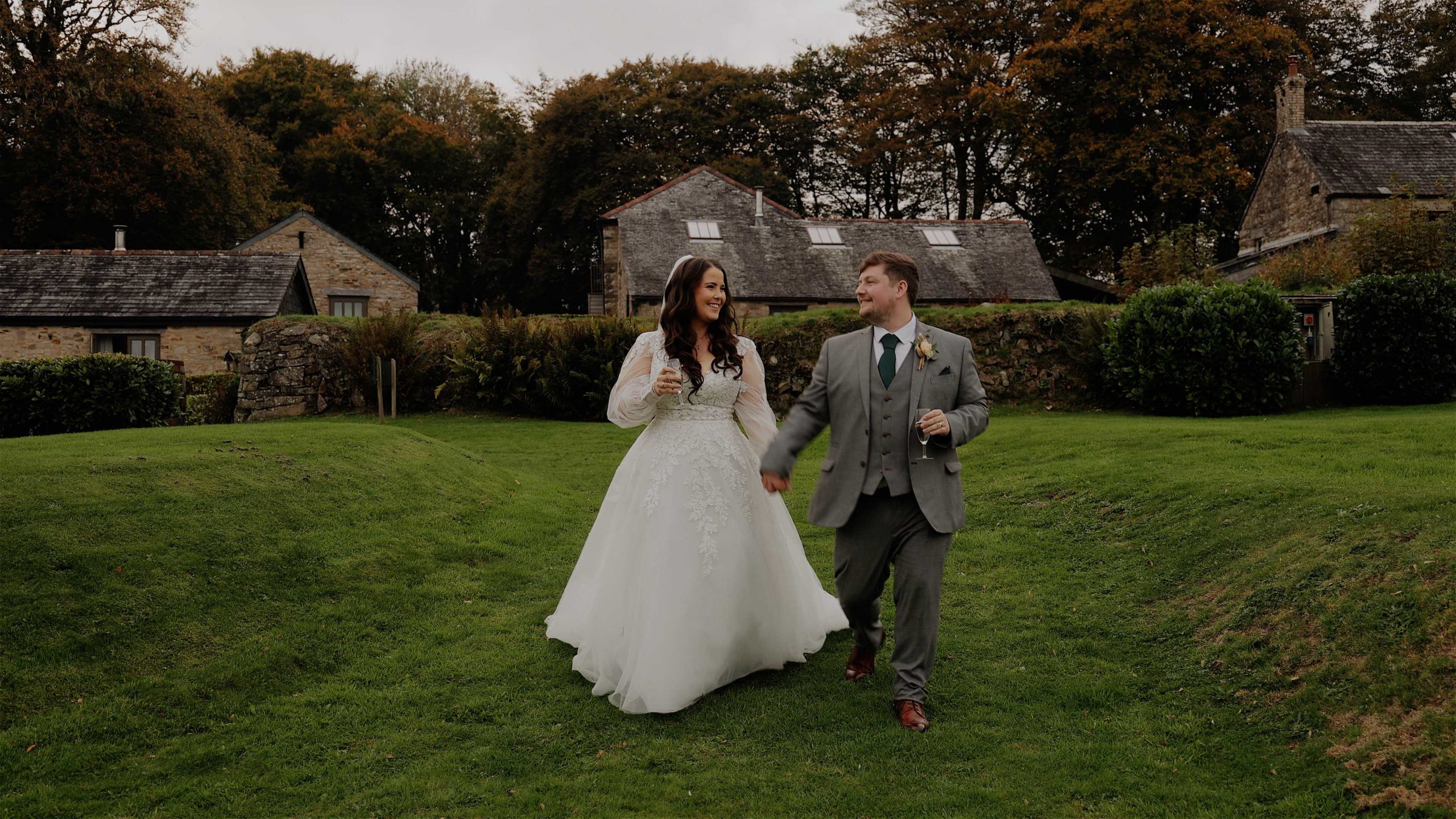
When couples think about being filmed on their wedding day, there is often a natural awareness that comes with it. Even when people feel relaxed, there is still that small instinct to be slightly “on” in front of the camera, to think about how things look, or to be aware of where the camera might be at any given moment.
That is completely normal, and it is something I see at almost every wedding I film across Devon, Cornwall and further afield. But what is interesting is how quickly that awareness tends to fade as the day unfolds, and how much that shift changes the way the final film feels.
When awareness turns into presence
At the beginning of the day, there is often a little bit of structure around how people behave in front of the camera. A smile held a touch longer, a moment of stillness that feels slightly intentional, or a brief awareness that something is being filmed.
But as the day moves forward, something usually changes without anyone noticing. The focus moves away from the camera entirely and settles back into the experience of the day itself.
People stop thinking about how things look and start reacting naturally to what is happening around them. And that is usually when the most honest moments begin to appear.
The moments that cannot be staged
Once that shift happens, you start to see the parts of the day that were never planned. A reaction during the ceremony that no one expected. A quiet exchange between you both when you think no one is watching. A parent holding back emotion during the speeches. Or a moment of laughter that breaks through all the nerves in the morning.
These are not directed moments, and they are not repeated. They only exist because the day is being experienced rather than performed.
And from a filmmaking point of view, those are always the moments that carry the most weight later on.
Why stepping away from performance changes everything
As a cinematic wedding videographer working across Devon, Cornwall and the wider UK, my approach is always observational rather than directed. I am not there to shape moments or ask you to repeat anything. I am there to follow the day as it naturally unfolds.
What I notice time and time again is that the strongest parts of a wedding film come when people are no longer aware of being filmed at all. Not because they are doing anything differently, but because they are simply present in the moment they are in.
That is where the tone of the film naturally shifts. It stops feeling like something arranged or performed, and starts feeling like something lived.
Seeing your day differently afterwards
One of the most common things couples say when they watch their film back is that they did not realise certain moments even happened. And that is because on the day itself, you are always slightly inside the moment rather than observing it.
You are moving through it, reacting to it, and experiencing it in real time. The film gives you the opposite perspective. It slows everything down and shows you what was happening around you while you were in the middle of it.
That difference is often where the emotional impact comes from when couples watch their film years later.
Final thoughts
There is never any need to perform on your wedding day. In fact, the less awareness there is of the camera, the more naturally the story begins to reveal itself.
Because what makes a wedding film meaningful is not how perfectly things were presented in the moment, but how honestly they were experienced.
And those moments only appear when the day is allowed to unfold without interruption.
If you are planning a wedding in Devon, Cornwall or anywhere in the UK and want a cinematic wedding film that feels natural, honest and rooted in real moments, I would love to chat.